


Sulphur Bentonite
Convenient formulation packed with essential nutrients
Product date sheets, pdf
Contact us
Convenient formulation packed with essential nutrients
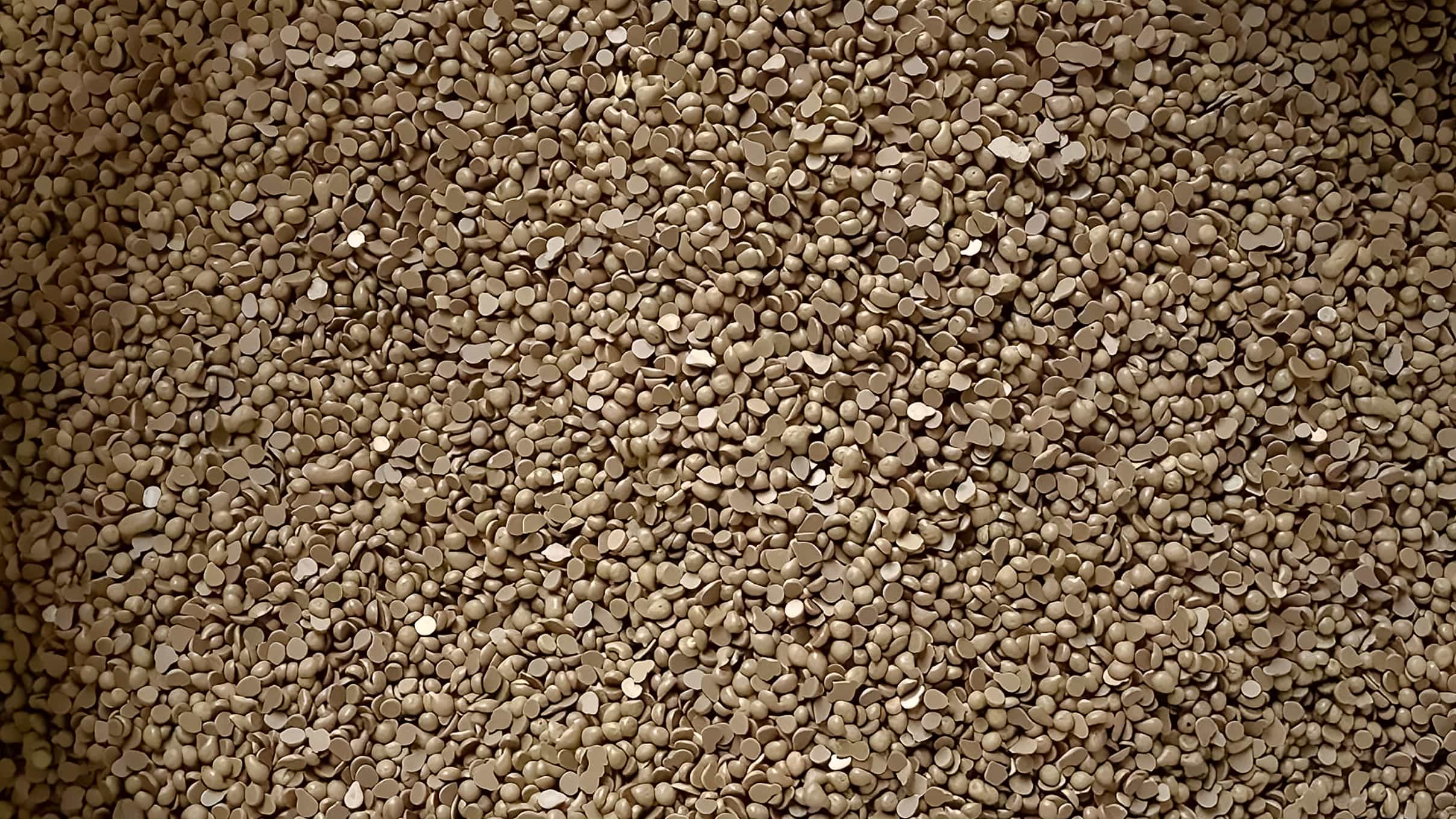
Sulphur Bentonite is a type of sulphur fertilizer that combines elemental sulphur with bentonite, a clay mineral, to form granules. This formulation improves the handling, storage, and dispersion of elemental sulphur , making it more convenient for application. The bentonite serves as a carrier or matrix for the sulphur, as such sulphur is released gradually as it undergoes oxidation in the soil. The controlled release makes sulphur available to plants over an extended period of time. Bentonite clay, in addition to acting as a carrier for sulphur, can have soil conditioning properties. It may contribute to improving soil structure, water retention, and cation exchange capacity.
Sulphur bentonite, with its clay content, can be beneficial in sandy soils. The clay component in sulphur bentonite may help improve soil structure and water retention in sandy soils.
Sulphur bentonite may provide additional benefits in soils with low organic matter. The organic matter in the bentonite can contribute to soil improvement over time.
Controlled release of sulphur can be advantageous for crops that benefit from a longer nutrient release period.
*Both Sulphur Granular and Sulphur Bentonite can benefit a wide range of crops. The choice between sulphur bentonite and sulphur granular should consider the specific soil characteristics, target crops, and the desired release characteristics of sulphur.
| Appearance | Pastilles, grayish/brownish in color |
| Particle size, min 90% | 1–4 mm |
| Sulphur (S), min, % | 90 |
| Inert filler material (bentonite), min, % | 9 |
| Arsenic (As), max, mg/kg | 10 |
| Cadmium (Cd), max, mg/kg | 20 |
| Lead (Pb), max, mg/kg | 2 |
| Chromium (Cr), max, mg/kg | 200 |
| Mercury (Hg), max, mg/kg | 0.2 |
| Moisture, max, % | 0.5 |